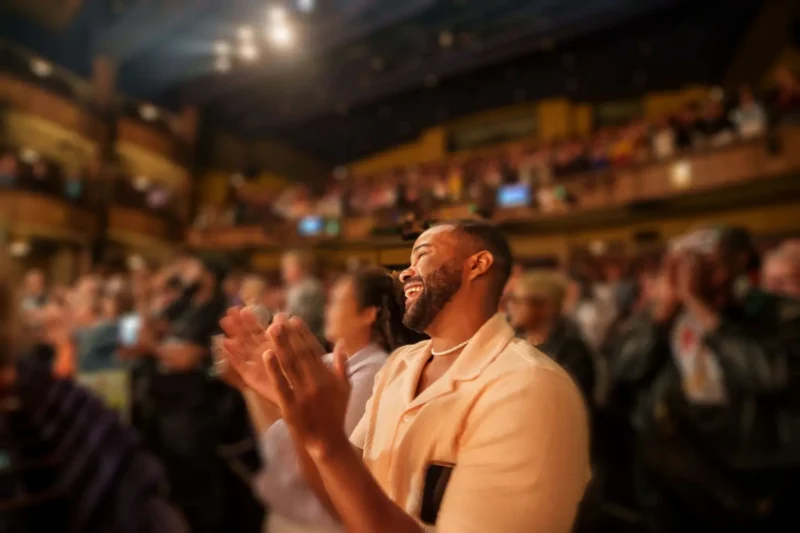
Primary Trust is on stage through November 3.
By Raquel Torre
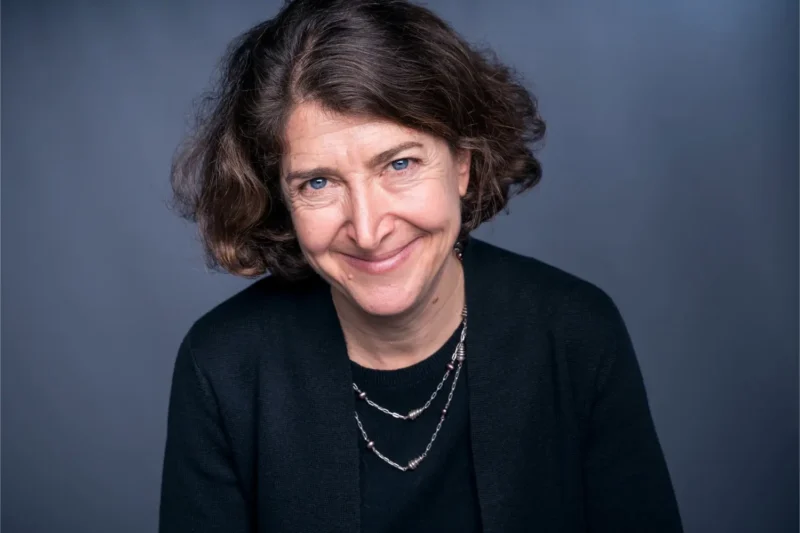
Making her mainstage directorial debut with Primary Trust, Malkia Stampley brings a wealth of experience to the stage, with a diverse array of directing credits including STEW at Shattered Globe and Black Nativity at Black Arts MKE. As the Goodman’s BOLD Artistic Producer, her vision and artistic voice sets the stage for this Pulitzer Prize-winning production.
Raquel Torre: How did you initially find out about Primary Trust?
Malkia Stampley: While on a trip to New York, I had dinner with a dear friend, Zora Howard, who also happens to be a playwright—she recommended that I see this play. Then I went to Roundabout for a performance, and I didn’t realize at the time that I was walking into my favorite type of play.
Raquel: What makes up your favorite type of play?
Malkia: Those that remind the audience what it is to be on a journey of healing, finding joy and being a good citizen of the world. I am drawn to plays that are text-based—not reliant on the visual, but reliant on the actor. My favorite kind of plays are the ones that make you wonder if the playwright wrote it specifically for the actor you’re seeing on stage.
Raquel: Tell us about this Chicago-based cast and why they’re right for this play.
Malkia: They’re all absolutely perfect! We have an abundance of riches when it comes to talent in this city, so we weren’t worried about finding talented people for these roles. As I spent time meditating on this play, I truly saw Namir Smallwood as Kenneth. For him to be just as excited as I was about this play, it all just felt divine.
Raquel: Why this play now and here?
Malkia: On one level, we have a truly ensemble piece with four very different actors who together bring to life this amazing story—I think that is what a Chicago play truly is. On another level, I think many of us are dealing with grief, loneliness, transition and self-discovery, especially as we continue to transition out of the pandemic. Grief is not always about death, sometimes it’s about a new chapter and grieving an old one—whether that’s the change in a job or the loss of a friendship. This play also won a Pulitzer Prize and I think it’s because Eboni Booth is able to brilliantly tell a story that reminds us that I am you and you are me. A story that says we are all in this together—and we need that reminder now more than ever.
Raquel: How do you visually describe your take on this play?
Malkia: When I think about the world of this play, it is intimate in nature, so close proximity to the audience is important. Because it is a memory play and memories are fragmented, not always linear or a one-straight line, I’m also interested in what these fragments are. How, when you retell a story from your past, you pull from a treasure chest of memories that you pick and choose from. I think of a child playing in their toybox. It’s a playground of memories and a playground is exploration—and that’s what a play is, and therefore, what I believe theater is. This production captures the playful intimacy, which I think the play deserves.
Raquel: Is there anything you hope the audience takes from this production?
Malkia: I hope that the audience leaves doing an audit of how neighborly they are. I hope they think about what role they are playing in the communities they’re in. And lastly, I wish they dare to connect to the person next to them.
Raquel: If this play was an ice cream flavor, what flavor would it be?
Malkia: I’m going to say Ben & Jerry’s Karamel Sutra. It has chocolate, vanilla and then there’s a hole in the middle filled up with soft caramel. With each bite you get a little bit of caramel, and I like the blending of different flavors because it’s never just about one! You need multiple flavors in ice cream, just like you need a variety of folks that make up the community that Kenneth is in. At the center of it is the gooeyness of love or joy, that extra little something.
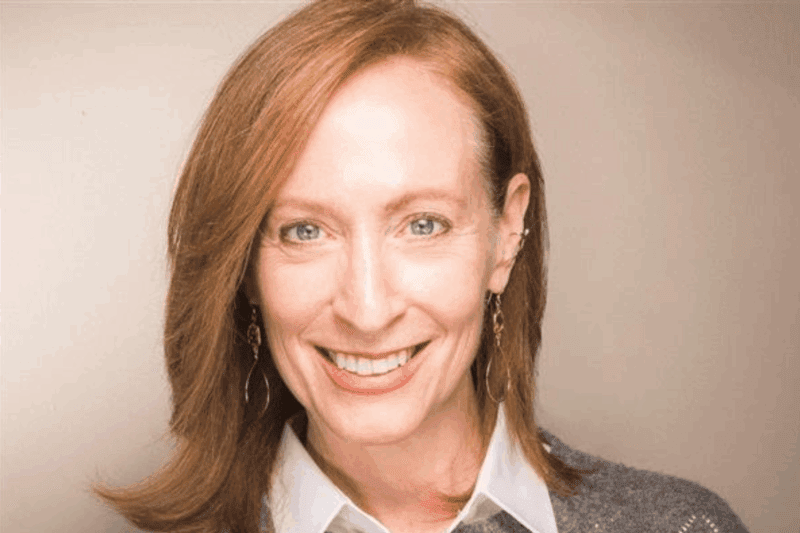
Raquel Torre is the Goodman’s 2024/2025 Michael Maggio Directing Fellow and the Movement Coach for Primary Trust.