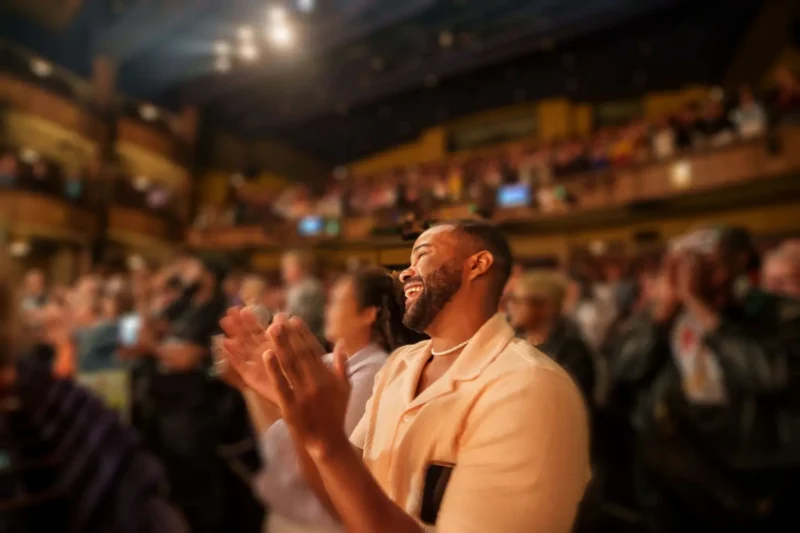
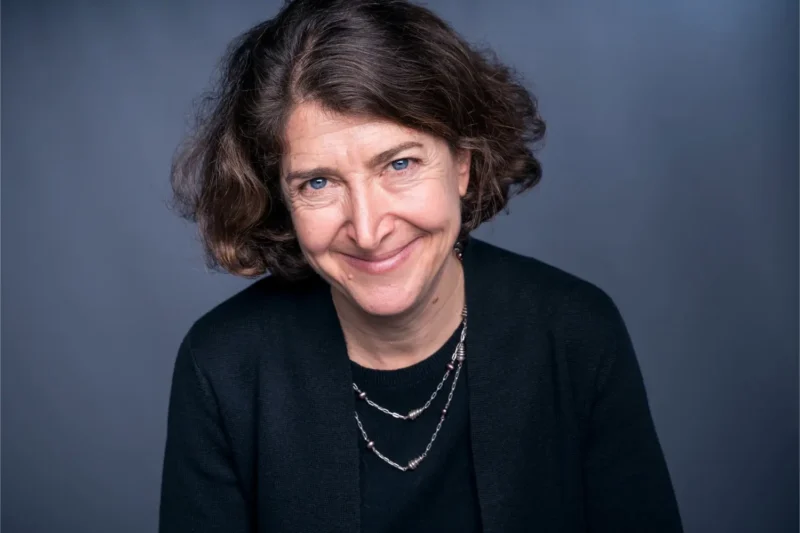
Goodman Theatre Associate Director of Education Tyra Bullock chats with Playwright Phanésia Pharel to discuss the inspiration behind Dead Girl’s Quinceañera.
TYRA BULLOCK: What has the journey been like developing this new work?
PHANÉSIA PHAREL: I wrote Dead Girl’s Quinceañera when I was in graduate school. I went to University of California San Diego, which I think is such a great playwriting program because Naomi Iizuka is there, who is a wonderful playwright. I actually wanted to write a different play, but Naomi was like, this is the one you should write. And she was correct!
At UCSD, they have a festival each year. Your first year, you write a one-act. Then your second year, it’s a full-length play. Dead Girl’s Quinceañera was my first full-length play. It was a workshop production with students, and a learning opportunity about how to develop your work and train you for new play development. That first draft of the play didn’t have the right ending. It wasn’t until I went to The O’Neill National Playwrights Conference last summer that everything sort of clicked. The O’Neill is such a special new play development spot, as there was more availability for Afro-Latino actors. I was able to really flesh out the ending, and the play grew so much in that workshop, which was really awesome.
TB: How did you get connected with Director Melia Bensussen?
PP: Melia runs The O’Neill and that’s how we met. She read my script through a blind submission process. So, it was her who truly changed my life. She’s worked with Jose Rivera, and also with Tony Kushner on world premieres. It isn’t very often a younger playwright gets to work with someone who has worked with legends, who has had a lot of great experience. So, when that opportunity presented itself, I would have been a fool not to take it.
TB: As a playwright, who are some of your biggest inspirations?
PP: That’s such a good question. I would say Ntozake Shange. I love Adrienne Kennedy, she’s a huge inspiration for me. I would say Alice Childress. Jeff Augustine is a huge influence. And there’s a play that I like—all the women who are writing teen girl plays now and the reason we’re writing those plays—is Dance Nation by Clare Baron. For Dead Girl’s Quinceañera, I was also inspired by Karen Zacarías’ Destiny of Desire and the way she used novela. It’s such a smart play.
TB: You have a broad spectrum of Latina representation in this play. How has your lived experience as a Haitian American factored into your writing for these characters?
PP: I was just watching New York City Mayor Zohran Mamdani helping promote a woman who’s running for Congress in a district with a large Dominican population. Her last name is Chevalier, which is a Haitian last name. There have been campaigns to smear her by claiming she’s Haitian. She’s Dominican, but they’re like, “She’s Haitian. She’s not really one of us.” Being Haitian, I think all Haitians and Dominicans share an island and a history. And to a certain extent, we share culture and for many of us, blood. And so that is always present in who I am as a person. I grew up in Miami, and it’s one of the most diverse cities in the United States of America. You’ve got Venezuelans, you’ve got Colombians, you have Jamaicans—so to tell a story about these young women, it would be so crazy to not have that sort of array of diversity.
TB: I also noticed there’s quite a few references to the characters’ complexions and how that factors into their identities as young women.
PP: My mom always jokes and says, “a lot of people in Miami are Black behind the ears.” You’ve got a Black grandmother, you have a Black cousin, but you’re being weird to this Jamaican or this African-American or this Haitian person? Colorism is a huge thing in the Caribbean and Latin America. It’s a thing in my family. It’s a thing that you experience in Miami.
TB: Why did you choose to have this story revolve around a quinceañera?
PP: I remember being 15 years old, and it’s like, “oh my God, what’s going to happen to Talia after her quince?” And there was just this idea of once you’re 15, something changes.
It’s been explored, especially in Latin American storytelling, but I haven’t seen it in a play. It’s so cool in theater when characters transform on stage, and coming-of-age plays are about, I see the world in you. I see the world differently because of an experience I have had. I was really interested in the quinceañera as a site for change and transformation for these characters.